
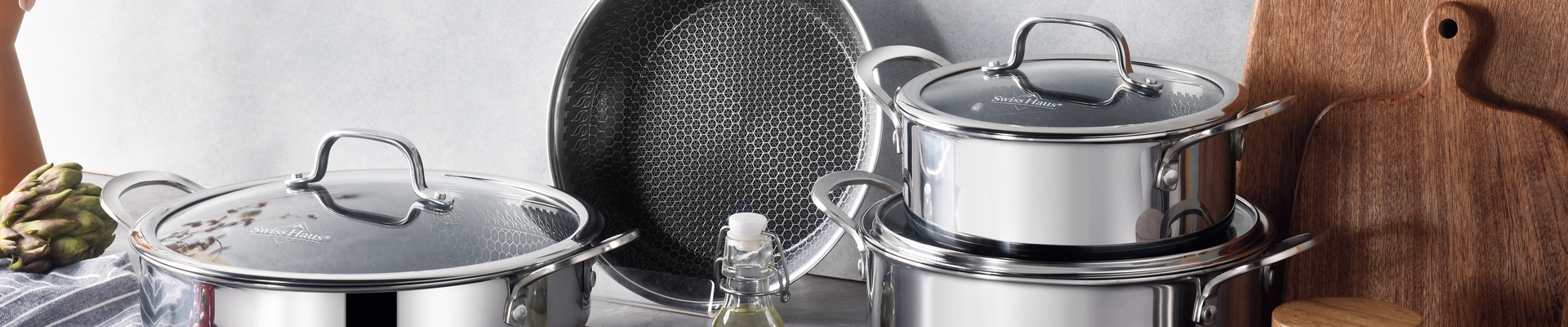
Complete Guide to Using Home Induction Cooktops
Home induction cooktops have become essential kitchen appliances in modern kitchens due to their rapid heating, absence of open flames, energy efficiency, convenience, and easy cleaning. They are suitable for various home cooking scenarios such as stir-frying, simmering soups, boiling noodles, and cooking porridge. However, many beginners often encounter issues like failure to heat, unusual noises, or incompatible cookware, and improper operation can even pose safety hazards. This guide consolidates the full induction cooktop usage process, cookware selection tips, common troubleshooting, and daily maintenance methods. Packed with practical insights, it offers straightforward, easy-to-understand content. Beginners can follow these steps directly to master correct usage and extend the appliance's lifespan.
Pre-Use Preparation: 3-Step Inspection to Eliminate Safety Hazards
The core of pre-use checks for induction cooktops is “Inspect the unit, inspect the power source, inspect the cookware.” Though seemingly simple, this routine effectively prevents operational failures. Beginners especially must develop the habit of performing these checks beforehand—no step should be skipped.
(1) Unit Inspection
1. Inspect the cooktop surface (ceramic panel) for cracks, damage, or oil buildup. Cracks may cause uneven heating and potential shattering during operation—immediately stop use and replace the panel.
2. Inspect the ventilation openings on the sides and bottom of the unit. Ensure they are free of obstructions (such as dust, vegetable scraps, or wires). Blocked vents can cause internal components to overheat, triggering automatic shutdown and potentially damaging the core components over time.
3. Test all control panel buttons by lightly pressing each function key (power, heat settings, timer, etc.). Verify responsive operation, clear display, and no lag or malfunction. If buttons fail, first check for grease buildup causing adhesion.
(II) Power Supply Inspection
1. Select a compatible power outlet, preferably a dedicated one (avoid sharing with high-power appliances like refrigerators, air conditioners, or microwaves) to prevent circuit breakers tripping due to overload or short circuits. The outlet must have a rated current ≥10A and carry 3C certification.
2. Inspect the power cord for damage, aging, or exposed wires. Ensure the plug fits securely into the outlet to prevent loose connections, overheating, or poor contact. Do not use a damaged power cord; replace it with an original manufacturer-supplied cord.
3. When placing the induction cooktop, ensure at least 10cm clearance between the bottom of the unit and the countertop surface, and at least 5cm clearance on the sides. Avoid placing it directly against walls or cabinets to ensure proper heat dissipation. Keep it away from water sources (such as under faucets) to prevent water ingress and short circuits.
(3) Cookware Inspection (Critical Step to Prevent Non-Heating)
The induction cooktop generates heat by creating a magnetic field through its bottom coil, causing friction between the cookware's metal molecules. Therefore, cookware must be magnetic to function properly. Inspection methods and requirements are as follows:
1. Magnetic Properties: Test by attaching a magnet to the cookware base. If it adheres firmly, the cookware is suitable (e.g., cast iron, composite-bottom stainless steel). If it does not stick, the cookware cannot be used (e.g., pure aluminum, copper, ceramic without a magnetic layer).
2. Cookware Size: The bottom diameter must be ≥12cm and not exceed the induction cooktop panel dimensions. A bottom that is too small will trigger the cooktop's overheat protection, preventing normal heating. The bottom must be flat without unevenness, otherwise poor contact will cause uneven heating and increased power consumption.
3. Cookware Weight: Avoid excessively heavy cookware (generally ≤5kg) to prevent crushing the induction cooktop surface. Ceramic surfaces are particularly brittle and prone to cracking under heavy impact.
4. Clean Cookware Base: Thoroughly dry the base with a dry cloth to remove moisture and grease. Water residue causes abnormal noises and slippage during heating, potentially damaging the surface, while grease reduces heat transfer efficiency.